The range
Four machines, four markets.
All of them make the product to order, take card payments and report their status remotely. All four are built; their manufacturer’s data sheets, however, are not published here yet.
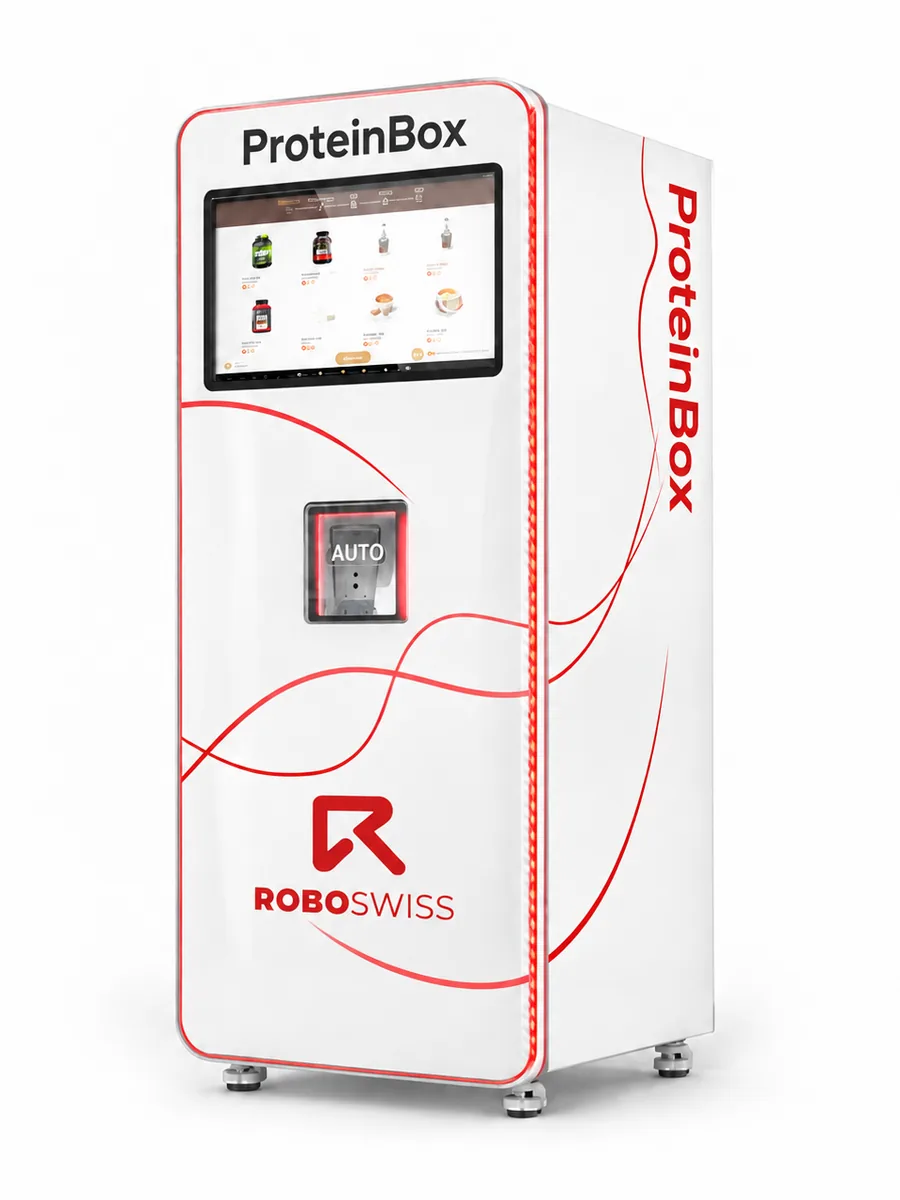
ProteinBOX
Protein shakes blended to order
The powder is measured, the liquid added, the shake blended in front of the customer. Nothing sits waiting on a shelf: the machine makes it, it doesn’t dispense it.
ProteinBOX exists: the visual is of the machine. Still to be published are its footprint, power supply and capacity, which come from the manufacturer’s data sheet.
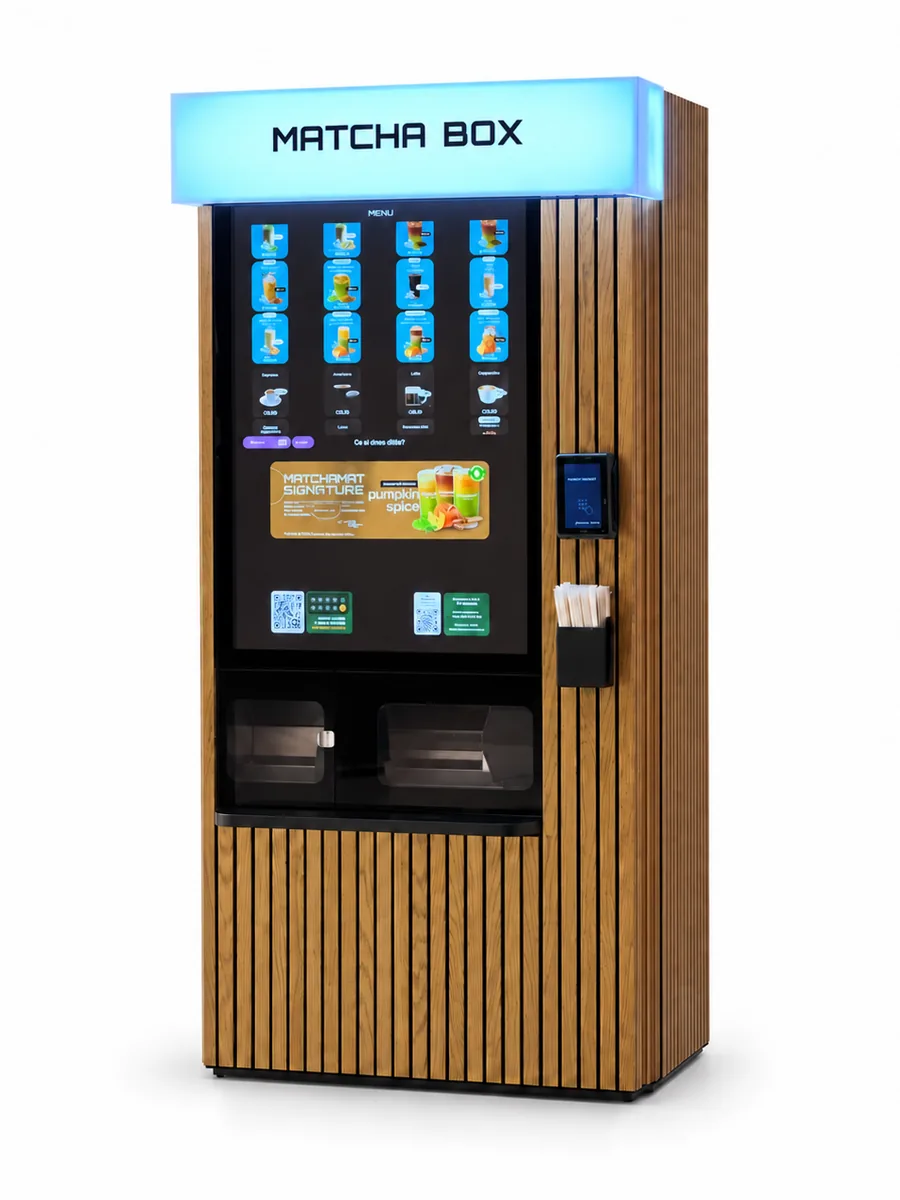
MatchaBOX
Matcha brewed cup by cup
Measured, water at temperature, whisked: the matcha is made to order, hot or iced. No barista, no queue, no jug going cold.
MatchaBOX exists: the visual is of the machine. Still to be published are its footprint, power supply and capacity, which come from the manufacturer’s data sheet.
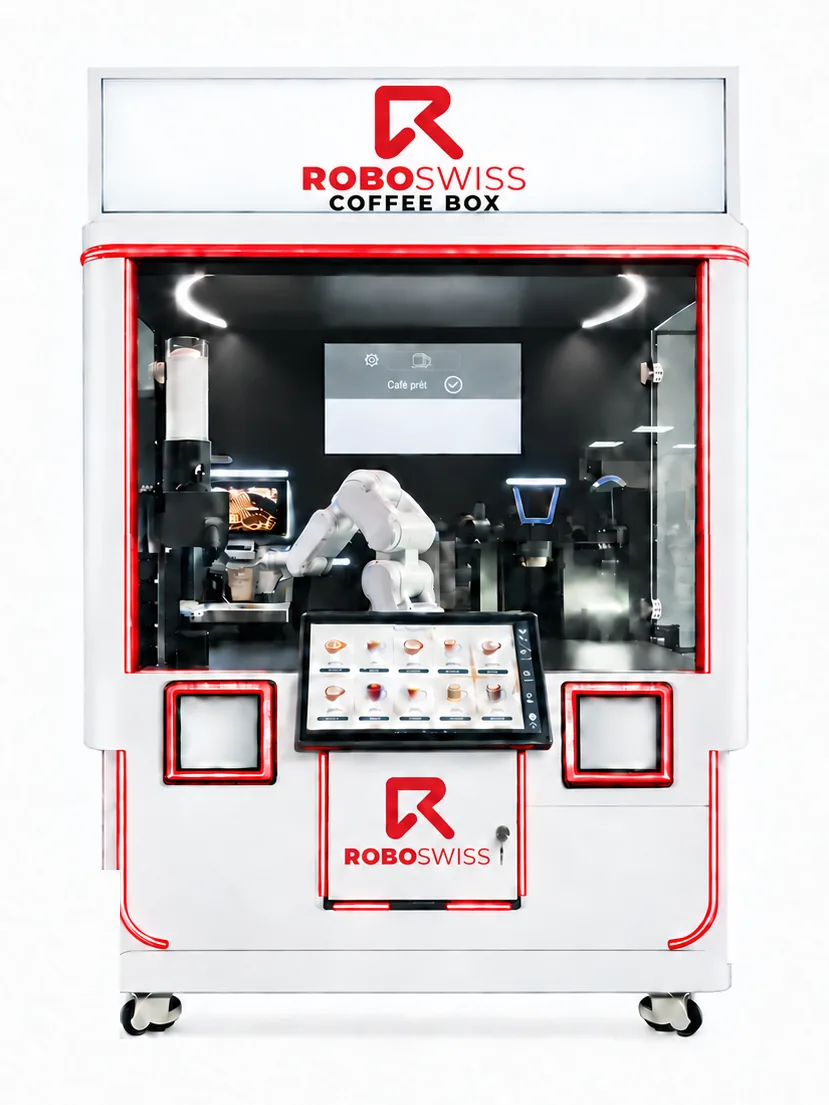
CoffeeBOX
A robotic arm that makes the coffee and hands it over
The arm picks up the cup, places it, starts the extraction and hands it over. The whole process is visible — that is what stops people in front of the machine, and what sets it apart from a drinks dispenser.
CoffeeBOX exists: the photograph is of the machine. Still to be published are its footprint, power supply and capacity, which come from the manufacturer’s data sheet.
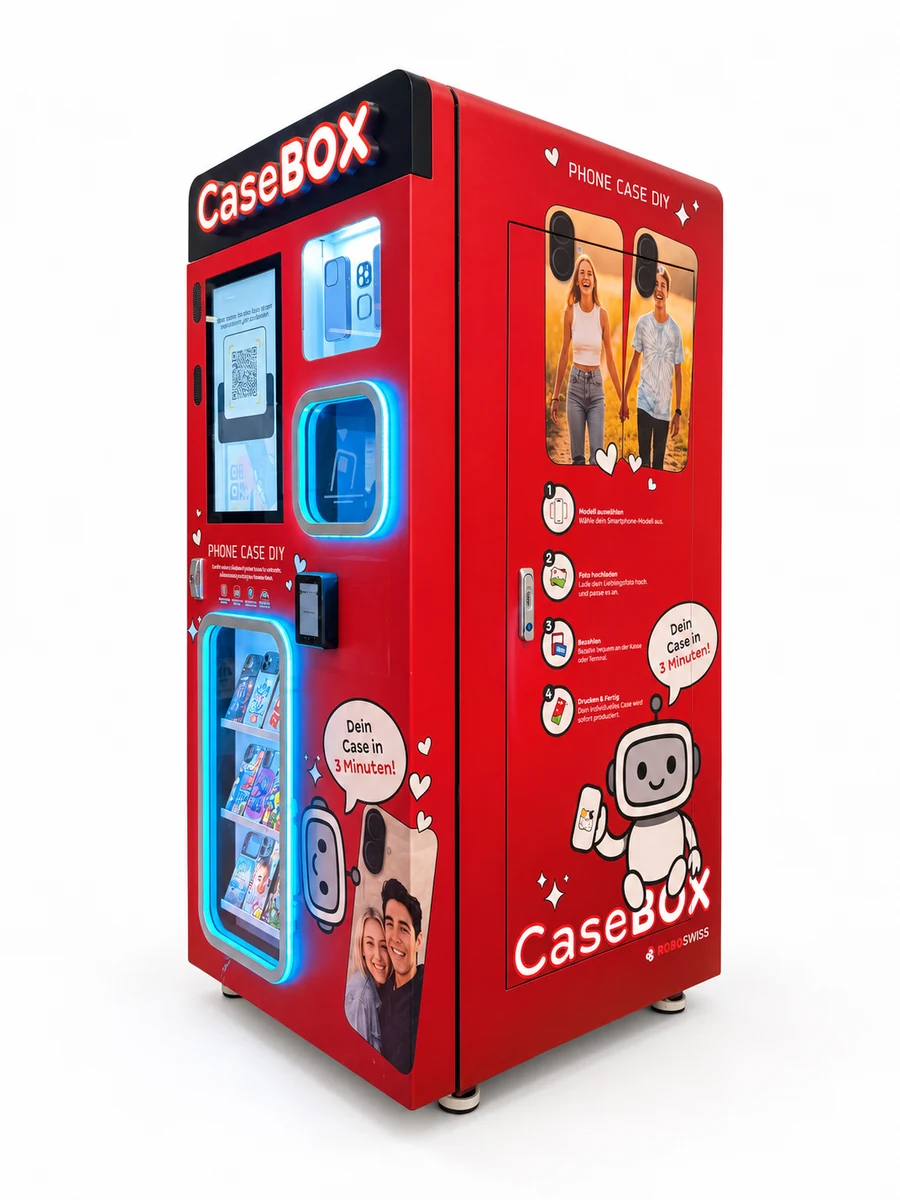
CaseBOX
Phone cases printed on demand
The customer sends a photo from their phone, frames it on the screen, and the case is printed on the spot. They see exactly how it will look before paying.
CaseBOX exists: the sequence and the time below are the machine’s own. Still to be published are its footprint, power supply and capacity, which come from the manufacturer’s data sheet.
CaseBOX
Four steps, three minutes.
The customer does everything on the machine’s screen. The time and the steps are the ones CaseBOX states itself.
The cycle
Five steps, no staff.
The same sequence on all four machines, from the order to the data coming back.
Payment
By card, no till.
No coins, no notes: all four machines take card payments. So there is no till to empty, no cash collection to organise, and the most common fault on a classic vending machine — the coin mechanism — simply isn’t there.
Which card schemes are accepted depends on the terminal fitted to the machine and on the acquiring contract. The quote states them.
Telemetry
The machine tells you what it sells.
Stock level per product, transactions, peak hours, temperature and faults: all of it comes in continuously. You send out a round because the machine asks for it, not because the calendar says so.
The detail of the supervision system — access, history, alerts — is in the technical documentation.